
LiveOps is the other half of your revenue
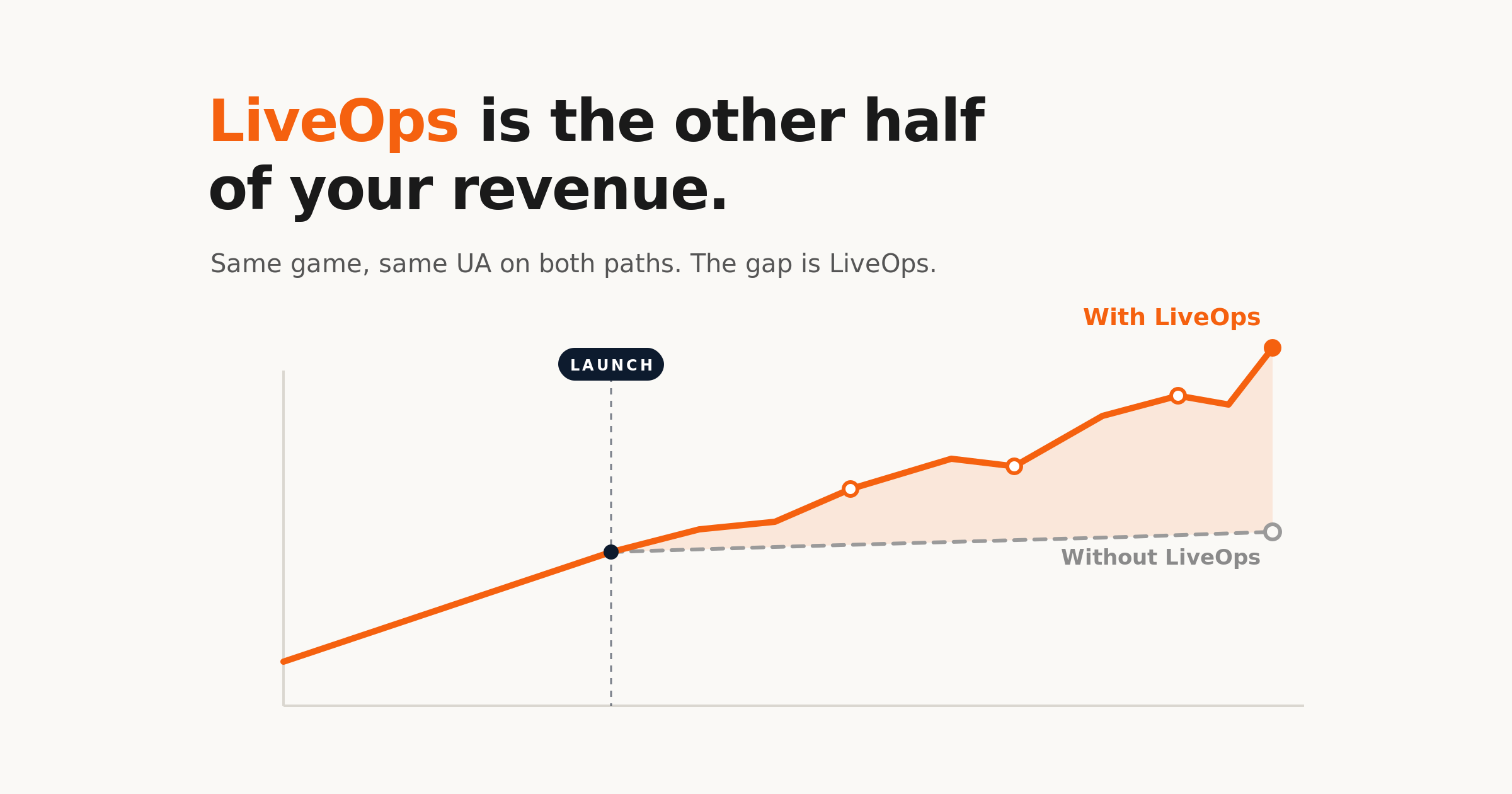

Most studios pour everything into the core game and the next big feature. But that is only half of where revenue and retention live. The other half is LiveOps, and most teams only scratch the surface.
I spend my days helping game studios, dozens by now, and the same pattern repeats. The roadmap is features, the wins are launches, the calendar is release dates. The whole company is built to ship the next big thing.
That foundation matters. A strong core game and ambitious features bring players in. But they are only half of the opportunity. The other half is what you do once the game is live, every day it stays live: the events, offers, flows, and experiments that turn an installed base into paying players. In nearly every studio I see, it runs at a fraction of its potential.
In the studios I work with, closing that gap moves revenue by double digits, sometimes far more, without shipping a single new feature. One top studio lifted revenue by 50% in a single day by implementing LiveOps improvements.
The winners never stop operating
The studios that dominate mobile built their organizations around that second half. Playtika is the clearest case: its whole model is LiveOps, and constant updates, timed events, and targeted offers keep Slotomania and Bingo Blitz alive more than a decade in. That discipline drove about 2.5 billion dollars in 2024 across 40 million players.
King runs thousands of simultaneous experiments, which is why Candy Crush, launched in 2012, still earned around 1.24 billion dollars in 2024. Playrix weaves timed events into Homescapes and Gardenscapes, which alone has crossed 3 billion dollars in lifetime revenue. What sets them apart is a mindset shift: they stopped treating the game as a product they ship and started treating it as a live service they operate, giving LiveOps the weight, budget, and talent of the next big feature.
Death by dev ticket
For most studios the problem is structural, not a lack of ideas. Even those running LiveOps route changes through the dev pipeline, so release cycles set the pace, not players. Someone other than the developer has to hold the controls: your LiveOps and monetization manager. Hand them over and revenue becomes something you run every day, not plan weeks ahead.
Idea to live before lunch
Without a dev ticket, idea to live test collapses from weeks to minutes, and experiments you ran monthly you run several times a week. When trying something costs an afternoon instead of a sprint, the small hunches finally get tested, and that is where a lot of the upside hides.
Rescue a bad Tuesday
Live games do not wait for your roadmap. A soft Tuesday, a rival's update, a holiday that lands early in one region: when the operator holds the levers, a bad day becomes fixable. One casual studio I work with watched a holiday weekend open soft; its operator pushed a themed event that morning and turned it into one of the strongest weekends of the quarter, no release. Because the operator owns the outcome, nothing is lost in handoff and engineering stays free for the next feature.
Money hiding in plain sight
When I sit with a new studio, the fastest revenue is usually in a few plays they left untouched. Limited-time events give players a reason to return. Personalized offers put the right bundle in front of the right player: a comeback deal for a lapsing spender, a starter pack for a newcomer. A tuned first-purchase flow turns free players into payers, the hardest and most valuable jump in the funnel. At one studio, the operator rebuilt a tired first-purchase offer in an afternoon and turned a trickle of new payers into a steady stream. Win-back flows re-engage lapsed players cheaply, and battle passes and subscriptions turn one-time buyers into steady revenue. Win-back and first-purchase are the most neglected, and the fastest to pay back.
You set LTV, not the game
Most studios treat lifetime value as a fixed output of the design. In practice it is a dial: the same game and the same cohort throw off very different LTV depending on how hard you operate. LiveOps is the lever that decides what every install is worth.
Aim beats offer
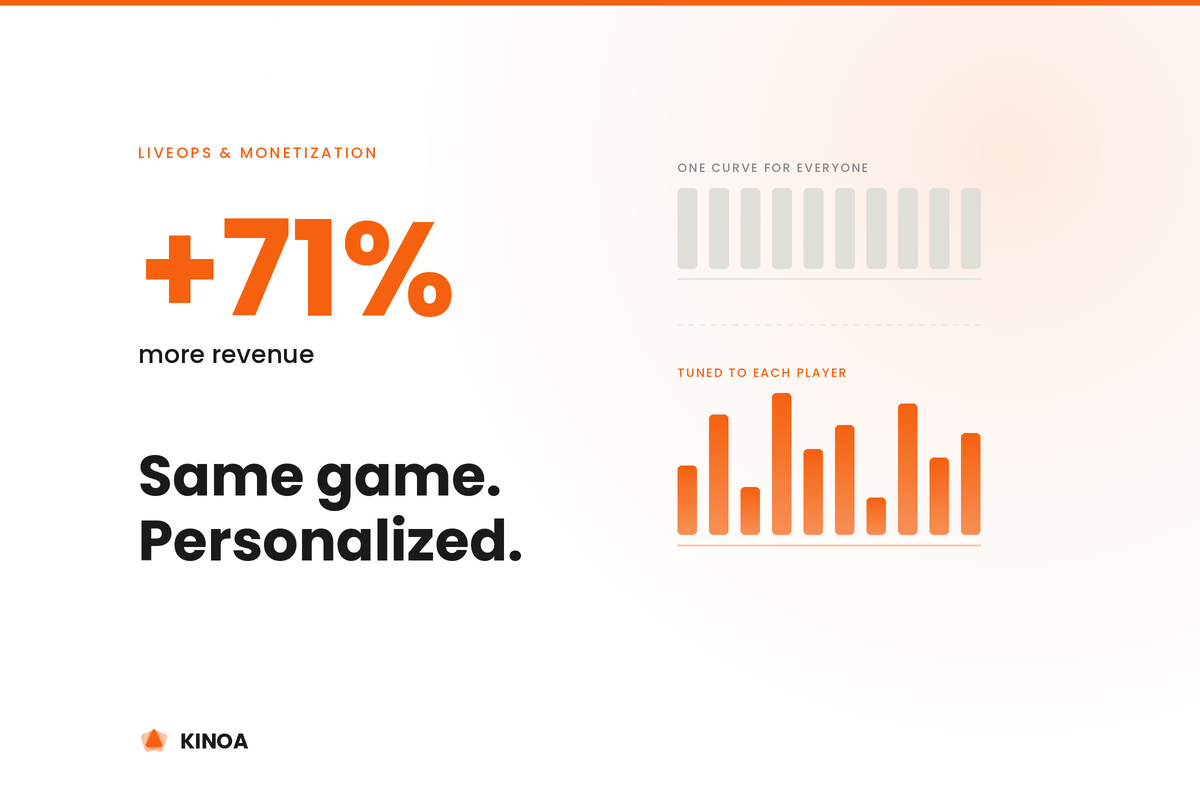
The same bundle shown to the right segment at the right moment can convert at three to five times the rate of a broadcast. A player one purchase from converting, a lapsing payer, and a spender who just cleared your content each need a different move. The creative is the small lever. Who sees it and when is the large one.
A hundred tiny wins beat one big bet
The studios that pull ahead are not smarter, they run more tests. High-frequency experimenting compounds: every two percent lift stacks on the last, so over a year a team running two hundred tests leaves a team running a dozen far behind. That is the sharpest argument for operator independence, because a team that opens a dev ticket for every test never reaches the volume where compounding takes hold.
A game is not shipped. It is operated.
Play the whole game
The studios I have watched make this shift did not ship a bigger feature or add headcount. They changed who holds the levers, and the revenue followed. This does not replace engineering. Run both halves: big features with the developers, live revenue with the person who owns the numbers and can act in real time. Kinoa is built for that. Give your operator a platform to run offers, events, flows, feature settings, dynamic content, and real-time segmentation without a release, and you finally work the half most studios leave on the table.
And it only matters more from here. AI will widen the gap between studios that operate and studios that only ship: personalization tuned to each player, hundreds of tests at once, content adjusted in real time, prediction of who will churn or convert. All of it lives in LiveOps, which means the second half of the game is about to become the more decisive one.
If you want help driving up your revenue through stronger LiveOps, hop on a call with us.
-clean.png)