How Erez Yosef (PlayStudios) Built Tetris Block Party Into a LiveOps Machine That Lifts Revenue, Powered by Kinoa


What happens when someone who is an expert in monetization gets to build a game from scratch? You get Tetris Block Party, a game built to be, in Erez Yosef's words, a playground for LiveOps. Erez, who manages Tetris Block Party at PLAYSTUDIOS, was tired of the old pattern where every revenue idea meant a dev ticket and a months-long wait. So he built the game around Kinoa from day one, so his team could act on ideas the moment they had them.
On the latest Two and a Half Gamers episode, Erez and Kinoa CEO Elias Sandler joined hosts Matej Lančarič, Jakub Remiar, and Felix Braberg for a live review. It's worth a listen.
What you'll hear
‣ coupon wheel they never built. Tetris Block Party never developed a coupon system. Instead they reused an existing wheel, dropped in coupon images as tokens, and wired the wins to a store that updates live per user. On a single day, Erez says it drove close to a 50% revenue lift, because the player feels they won the coupon rather than just seeing a sale.
‣ One wheel, four different jobs. That same wheel does the work of several features. It runs as a booster wheel, as a post-purchase mini game where a buy earns a spin for a bonus, as a PVP reward for a perfect clear, and as the coupon wheel. One built feature, reused endlessly instead of rebuilt each time.
‣ 2.7 rating to 4.5 in a week. A smaller studio on the episode was stuck at a 2.7 store rating after server problems. After integrating Kinoa, they shipped a simple two-button in-app, happy players to the store, unhappy players to a feedback form, and reached 4.5 within a week.
‣ Two operators running everything. The entire live game, economy, offers, LiveOps, and push, runs on a back office simple enough that Erez no longer needs technical people to operate it.
The core idea
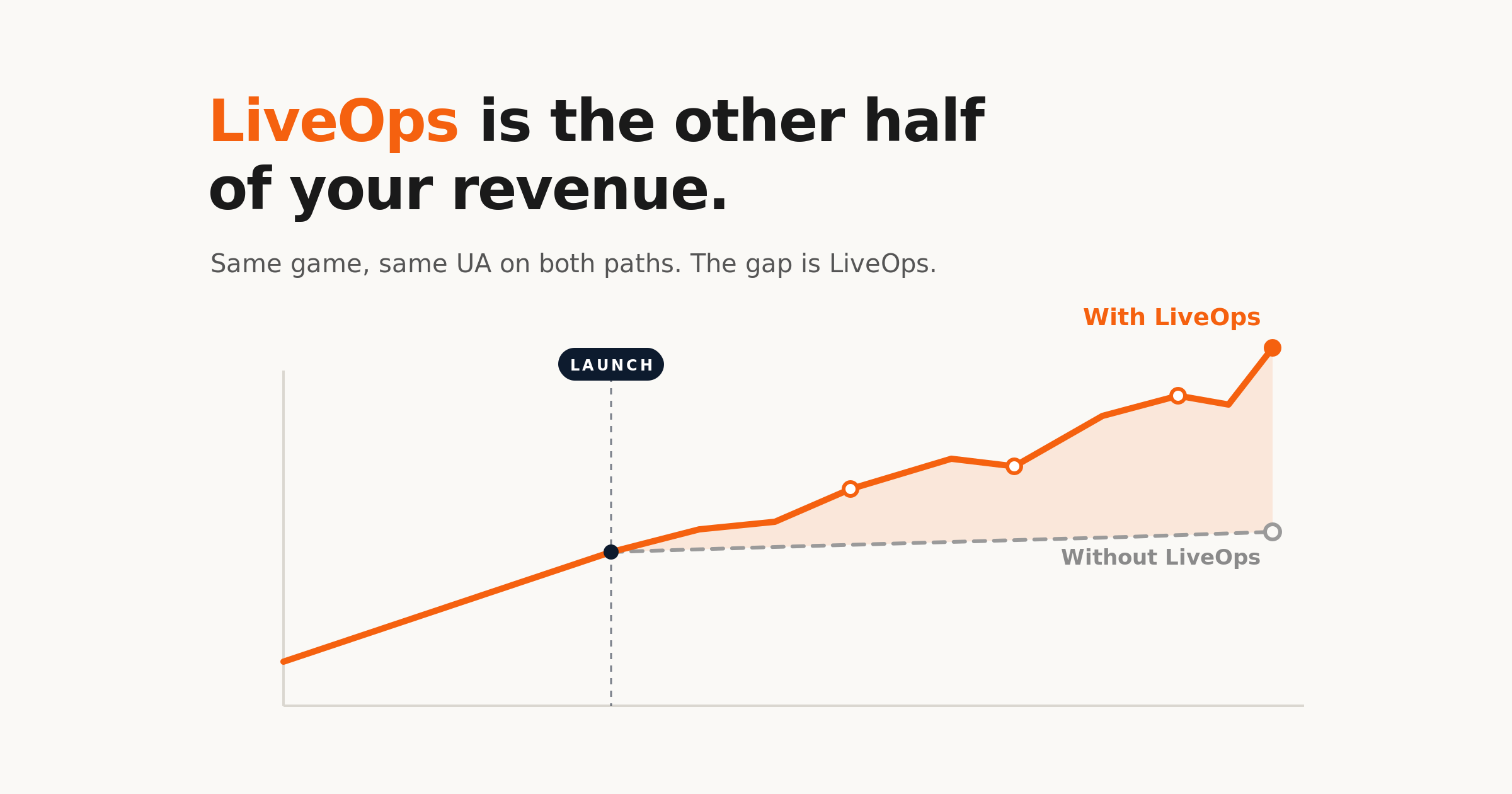
The pattern Erez keeps coming back to is simple: build the infrastructure once and flexibly, then let operators do the rest. The coupon wheel is the clearest example. There was no coupon system in the game, but because the wheel, the tokens, and the store were already flexible, the team could assemble a coupon feature and run it live without any new development. That is the difference between having an idea on Monday and shipping it Monday, versus filing a ticket and waiting a quarter.
Erez also shared where this goes next: reacting to churn and purchase signals the instant they happen, so a player about to drop gets the right treatment in the same session rather than a report two days later.
Want to see what this looks like for your game? Get a demo below 👇